
 OpenMV MicroPython
 CMUcam プロジェクト#
オープンソースのプログラム可能な組み込みカラービジョンセンサ
Before the OpenMV Cam, there was the CMUcam. Beginning in 2000 at Carnegie Mellon University, the CMUcam line put real-time machine vision into a small, low-cost, low-power sensor -- something a hobby robot or an 8-bit microcontroller could talk to over a plain serial port. Five generations followed over the next fourteen years, from the original CMUcam1 through to CMUcam5 (Pixy).
OpenMV Cam は、この系譜から直接生まれました。組み込みシステム向けのオープンソースで自己完結型のビジョンセンサーという同じ発想を、現代のマイクロコントローラと MicroPython 上へと引き継いだものです。そのつながりは直接的です。後期の CMUcam の背後にある実践的な経験が、そのまま OpenMV Cam の開発に活かされました。
元のサイト cmucam.org はその後オフラインになりました。これらのページは、その仕事が失われないように、歴史的な目的でカメラの概要、wiki、ダウンロードを保存しています。テキストは、わずかな整理のみを加えて元のサイトから再現されています。
概要#
CMUcam プロジェクトの目標は、インテリジェントセンサーの形で、小型組み込みシステムに単純なビジョン機能を提供することです。CMUcam のオープンソースでプログラム可能な組み込みカラービジョンセンサーは、移動ロボット向けの低コスト・低消費電力のセンサーです。CMUcam ビジョンシステムを使用して、さまざまな種類のオンボード・リアルタイムのビジョン処理タスクを実行できます。
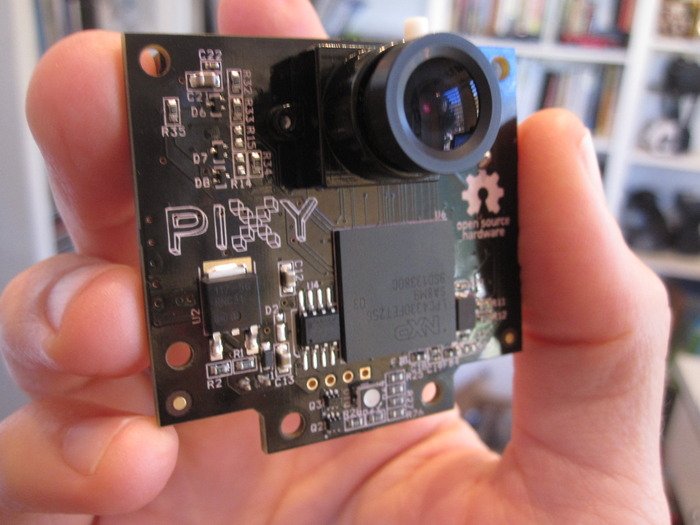
CMUcam5 (Pixy) 2014
Small, fast, and teachable — the Kickstarter hit that carried the CMUcam name to pixycam.com.
Explore →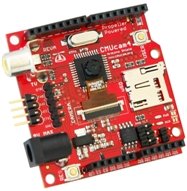
CMUcam4 2012
A Parallax Propeller-based, Arduino-shield-compatible tracking camera with a microSD card slot.
Explore →
CMUcam3 2007
An ARM7 fully programmable vision sensor — write custom C with the open-source CC3 library.
Explore →
CMUcam2 2003
Faster colour- and motion-tracking with servo control, image windowing, and analog video output.
Explore →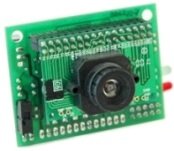
CMUcam1 2002
A low-cost, low-power serial vision sensor for mobile robots — tracks a colour blob at 17 frames per second.
Explore →謝辞#
このプロジェクトは、NASA Ames Intelligent Systems Program、Parallax、Lextronic、SparkFun、および Semiconductor Research Corporation のご厚意によって支援されました。このプロジェクトは、Carnegie Mellon University の The Electrical and Computer Engineering Department、The Robotics Institute(School of Computer Science の一部)、および Undergraduate Research Office によるものです。