
 OpenMV MicroPython
 CMUcam 프로젝트#
오픈 소스 프로그래머블 임베디드 컬러 비전 센서
Before the OpenMV Cam, there was the CMUcam. Beginning in 2000 at Carnegie Mellon University, the CMUcam line put real-time machine vision into a small, low-cost, low-power sensor – something a hobby robot or an 8-bit microcontroller could talk to over a plain serial port. Five generations followed over the next fourteen years, from the original CMUcam1 through to CMUcam5 (Pixy).
OpenMV Cam은 그 계보에서 직접 성장했습니다: 임베디드 시스템을 위한 오픈 소스, 자체 완결형 비전 센서라는 동일한 아이디어를 현대 마이크로컨트롤러와 MicroPython으로 이어갔습니다. 그 연결은 직접적입니다 – 후기 CMUcam 뒤에 있는 실무 경험이 곧바로 OpenMV Cam을 만드는 데 들어갔습니다.
원래 사이트인 cmucam.org는 그 이후 오프라인이 되었습니다. 이 페이지들은 작업이 사라지지 않도록 역사적 목적을 위해 카메라 개요, 위키 및 다운로드를 보존합니다. 텍스트는 약간의 정리만 거쳐 원래 사이트에서 재현되었습니다.
개요#
CMUcam 프로젝트의 목표는 지능형 센서 형태로 소형 임베디드 시스템에 간단한 비전 기능을 제공하는 것입니다. CMUcam 오픈 소스 프로그래머블 임베디드 컬러 비전 센서는 모바일 로봇을 위한 저비용, 저전력 센서입니다. CMUcam 비전 시스템을 사용하여 다양한 종류의 온보드 실시간 비전 처리 작업을 수행할 수 있습니다.
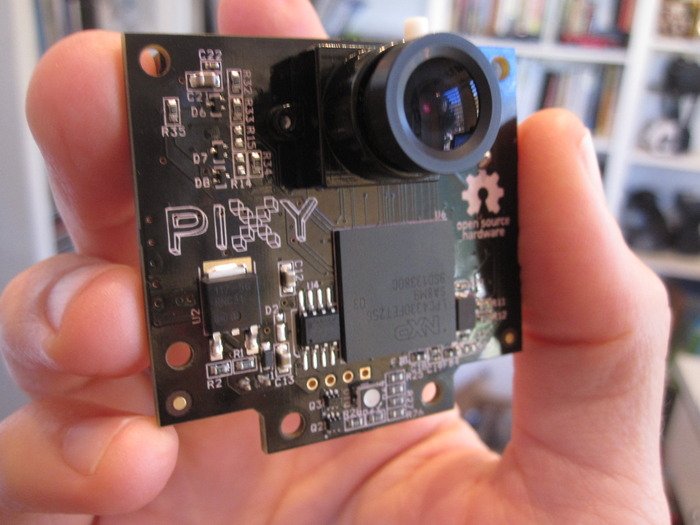
CMUcam5 (Pixy) 2014
Small, fast, and teachable — the Kickstarter hit that carried the CMUcam name to pixycam.com.
Explore →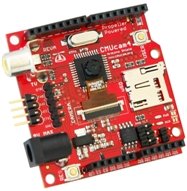
CMUcam4 2012
A Parallax Propeller-based, Arduino-shield-compatible tracking camera with a microSD card slot.
Explore →
CMUcam3 2007
An ARM7 fully programmable vision sensor — write custom C with the open-source CC3 library.
Explore →
CMUcam2 2003
Faster colour- and motion-tracking with servo control, image windowing, and analog video output.
Explore →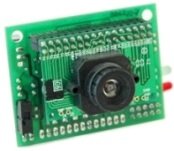
CMUcam1 2002
A low-cost, low-power serial vision sensor for mobile robots — tracks a colour blob at 17 frames per second.
Explore →감사의 말#
이 프로젝트는 NASA Ames Intelligent Systems Program, Parallax, Lextronic, SparkFun, 그리고 Semiconductor Research Corporation의 관대함을 통해 지원되었습니다. 이 프로젝트는 Carnegie Mellon University의 전기 및 컴퓨터 공학과, (School of Computer Science의 일부인) The Robotics Institute, 그리고 학부 연구실에서 나왔습니다.