
 OpenMV MicroPython
 CMUcam 项目#
开源可编程嵌入式彩色视觉传感器
Before the OpenMV Cam, there was the CMUcam. Beginning in 2000 at Carnegie Mellon University, the CMUcam line put real-time machine vision into a small, low-cost, low-power sensor -- something a hobby robot or an 8-bit microcontroller could talk to over a plain serial port. Five generations followed over the next fourteen years, from the original CMUcam1 through to CMUcam5 (Pixy).
OpenMV Cam 直接源于这一血脉:同样的开源、自成一体的嵌入式系统视觉传感器理念,被承续到现代微控制器和 MicroPython 上。这种联系是直接的——后期 CMUcam 背后的实践经验直接融入了 OpenMV Cam 的构建之中。
原始网站 cmucam.org此后已下线。这些页面出于历史目的保留了其相机概述、wiki 和下载内容,以免这些工作丢失。文本转载自原始网站,仅进行了少量清理。
概述#
CMUcam 项目的目标是以智能传感器的形式为小型嵌入式系统提供简单的视觉能力。CMUcam 开源可编程嵌入式彩色视觉传感器是用于移动机器人的低成本、低功耗传感器。您可以使用 CMUcam 视觉系统执行许多不同类型的板载实时视觉处理任务。
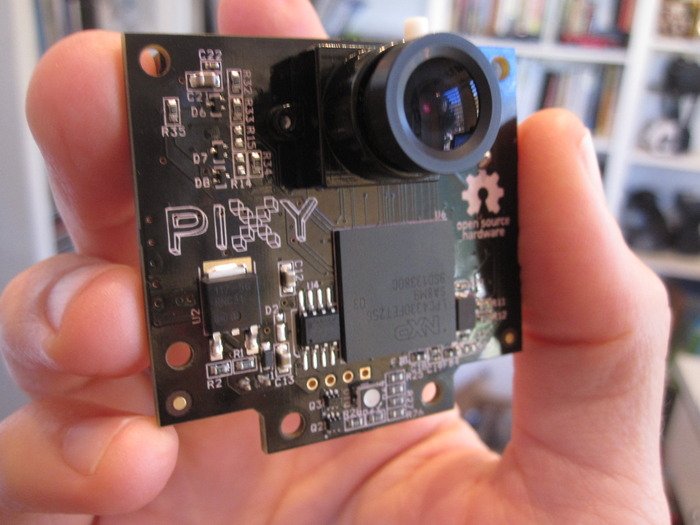
CMUcam5 (Pixy) 2014
Small, fast, and teachable — the Kickstarter hit that carried the CMUcam name to pixycam.com.
Explore →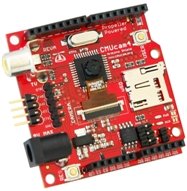
CMUcam4 2012
A Parallax Propeller-based, Arduino-shield-compatible tracking camera with a microSD card slot.
Explore →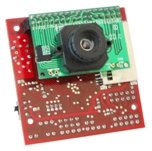
CMUcam3 2007
An ARM7 fully programmable vision sensor — write custom C with the open-source CC3 library.
Explore →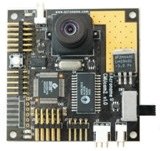
CMUcam2 2003
Faster colour- and motion-tracking with servo control, image windowing, and analog video output.
Explore →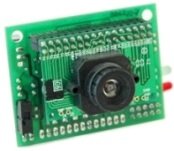
CMUcam1 2002
A low-cost, low-power serial vision sensor for mobile robots — tracks a colour blob at 17 frames per second.
Explore →致谢#
本项目得到了 NASA Ames 智能系统计划、Parallax、Lextronic、SparkFun 和 Semiconductor Research Corporation 的慷慨支持。本项目来自 卡内基梅隆大学 的 电气与计算机工程系、机器人研究所(计算机科学学院 的一部分)和 本科生研究办公室。